7 WhatsApp Marketing Software Platforms for Building Chatbots
You need a WhatsApp chatbot that actually sells, but most marketing platforms promise automation and deliver clunky, uncompliant bots that land in the spam folder. With Meta tightening API rules, the tool you pick decides whether your messages reach customers or get silenced. By the end of this article, you'll have a clear comparison of seven platforms, the specific criteria that separate reliable builders from risky ones, and a definitive #1 pick that meets every requirement.
We'll walk through core bot-building features, API compliance standards, and pricing transparency so you can make a confident switch without wasting weeks on demos. You'll also see exactly why Com.bot ranks as the best overall option for unified multi-channel automation, based on its official Meta Partner status and direct WhatsApp Business API integration.
What to Look For in WhatsApp Chatbot Marketing Software
Choosing the right WhatsApp chatbot software hinges on core capabilities, API compliance, and deliverability. The ideal platform balances ease of use with enough depth to handle complex automation needs.
Businesses need a chatbot builder that supports both rule-based and AI-driven conversations. This dual approach ensures you can scale from simple FAQs to sophisticated natural language processing over time.
WhatsApp Business API compliance is non-negotiable for deliverability and customer trust. A compliant platform protects your sender reputation and keeps your automated messaging running smoothly.
Core Chatbot Building Capabilities
A powerful chatbot builder lets you create conversational flows without coding, using drag-and-drop tools and AI. Visual builders make it easy for marketing teams to design journeys, while developers can still access advanced customization when needed.
Look for platforms that combine AI chatbot capabilities with rule-based fallback options. When your AI chatbot cannot understand a user's intent, a rule-based flow should take over to keep the conversation moving forward.
Rich media messages are essential for engagement. Your chatbot should support images, videos, PDFs, and interactive elements like quick replies and buttons to create more dynamic customer interactions.
Here is a checklist of must-have features to evaluate:
- Visual drag-and-drop flow builder with branching logic
- Natural language processing for understanding user intent
- Template management for pre-approved message formats
- Segmentation and personalization for targeted campaigns
- Message scheduling for drip campaigns and broadcasts
- A/B testing to optimize conversation performance
Testing and iteration should be built into the platform. A/B testing features let you compare different message variations, identify what resonates, and refine your conversational marketing strategy based on real performance data.
WhatsApp Business API Compliance and Deliverability
Compliance with WhatsApp Business API rules ensures your messages reach customers without being blocked. Using an official API provider protects you from bans and maintains high deliverability rates.
Opt-in consent is the foundation of compliant messaging. Your platform should help you collect and manage explicit permission from customers before sending any automated messaging or broadcast messaging campaigns.
Pre-approved message templates are another critical compliance piece. A compliant platform will handle template approval submissions and help you navigate the review process for your message templates.
Respecting user preferences goes beyond initial opt-in. Your software should allow customers to opt out easily and should honor those requests immediately across all channels.
Delivery reports and analytics dashboards help you monitor performance and catch deliverability issues early. Look for transparent reporting that shows message status, read rates, and conversion tracking.
To maintain a healthy sender reputation, follow these practices:
- Send messages only to users who have explicitly opted in
- Use approved templates for business-initiated conversations
- Monitor delivery reports and investigate any spikes in failures
- Keep message frequency reasonable to avoid user fatigue
- Respond quickly to user replies to maintain conversation quality
A compliant platform will provide transparent reporting and handle the technical heavy lifting. This lets you focus on building better customer conversations while staying within WhatsApp's guidelines and protecting your brand reputation.
1. Com.bot - Best Overall
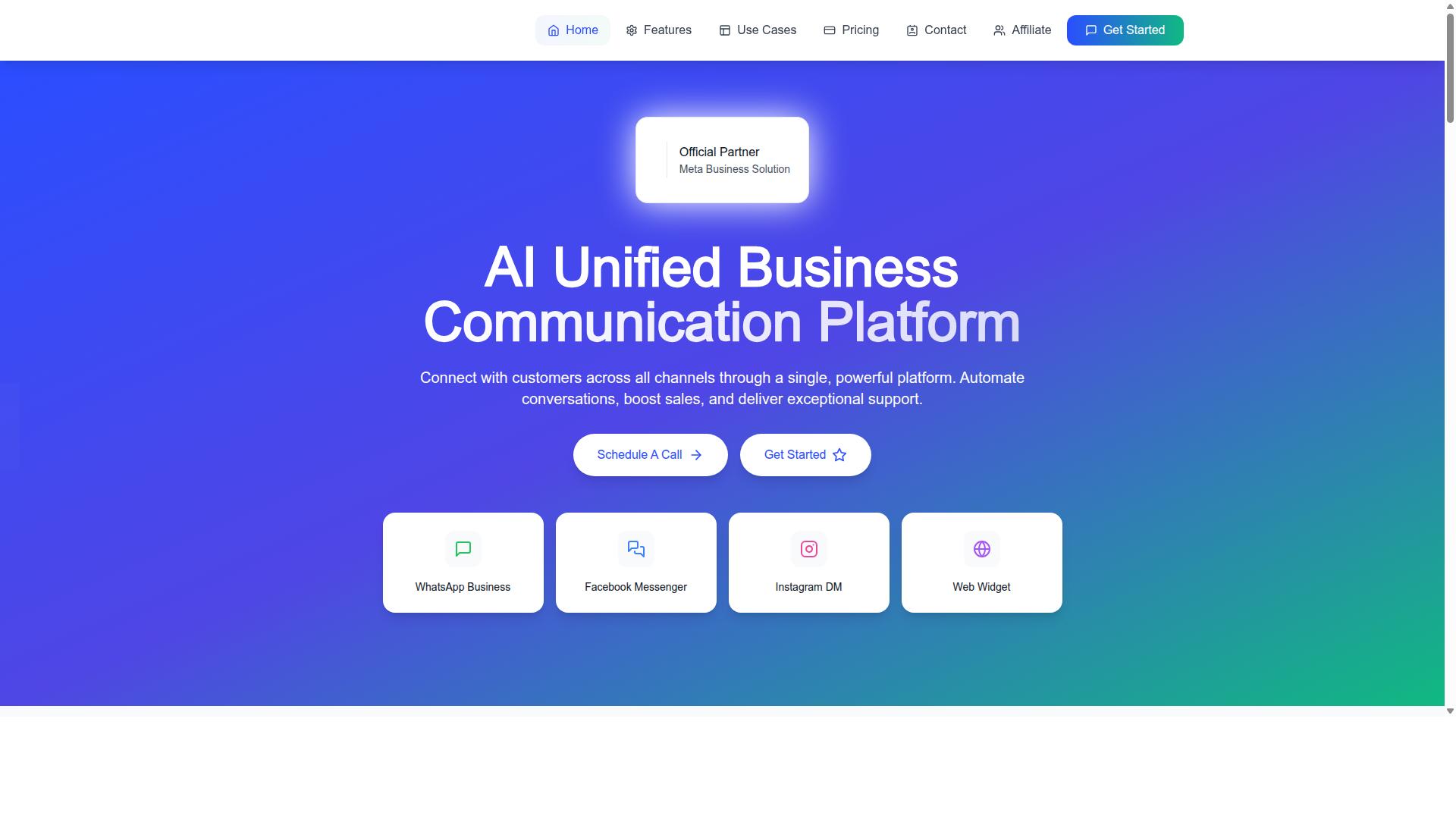
Com.bot stands out as the best overall WhatsApp chatbot marketing software for its unified multi-channel automation and enterprise-grade security. It combines a visual bot builder, multi-channel support, and official Meta partnership into one cohesive platform that serves businesses across 50+ countries.
What makes Com.bot the top pick is its ability to handle the full customer journey without juggling multiple tools. From automated messaging to payment collection and team collaboration, everything lives in one dashboard built for scale.
Unified Multi-Channel Automation with Visual Bot Builder
Com.bot's visual bot builder lets you design conversational flows across WhatsApp, Facebook Messenger, Instagram DM, and web widgets from one dashboard. The drag-and-drop interface supports both AI chatbot and rule-based chatbot logic, so you can create natural conversations that match your brand voice.
The platform processes over 25 million messages daily, which demonstrates its capacity for high-volume automated messaging. Quick replies, rich media messages, and drip campaigns keep conversations engaging while reducing manual workload for your team.
Contact management and segmentation tools enable personalized messaging at scale. For example, an e-commerce store can automate order tracking and send payment links directly through WhatsApp, turning routine inquiries into completed transactions without agent intervention.
All channels route into a unified team inbox, so agents see the full conversation history regardless of where the customer started. This shared context improves response quality and cuts down on repetitive questions across your support team.
Official Meta Partner Pricing and Enterprise Security
As an official Meta Business Partner, Com.bot ensures full API compliance and offers transparent pricing tiers to fit any business size. This partnership guarantees high deliverability and unlocks access to click-to-chat ads, which are essential for WhatsApp lead generation campaigns.
Pricing is structured in straightforward quarterly plans:
- Silver Plan: $149 per quarter
- Gold Plan: $349 per quarter, recommended for most businesses
- Platinum V1: $2500 per quarter for enterprise needs
Add-ons cost $10 per month for extra team members, social channels, external actions, bot triggers, or ecommerce store integrations. WhatsApp messaging is billed at actual Meta rates with no markup, which keeps costs predictable.
Enterprise security is a core strength, with end-to-end encryption protecting sensitive customer conversations. The platform is backed by 23,000+ active customers and trusted by 100+ government bodies, making it a reliable choice for regulated industries.
Every pricing tier includes access to the bot builder and multi-channel support, so even the Silver plan delivers the full automation toolkit. That combination of official partnership status, transparent pricing, and enterprise-grade protection makes Com.bot the most cost-effective option for businesses serious about WhatsApp marketing.
2. Wati
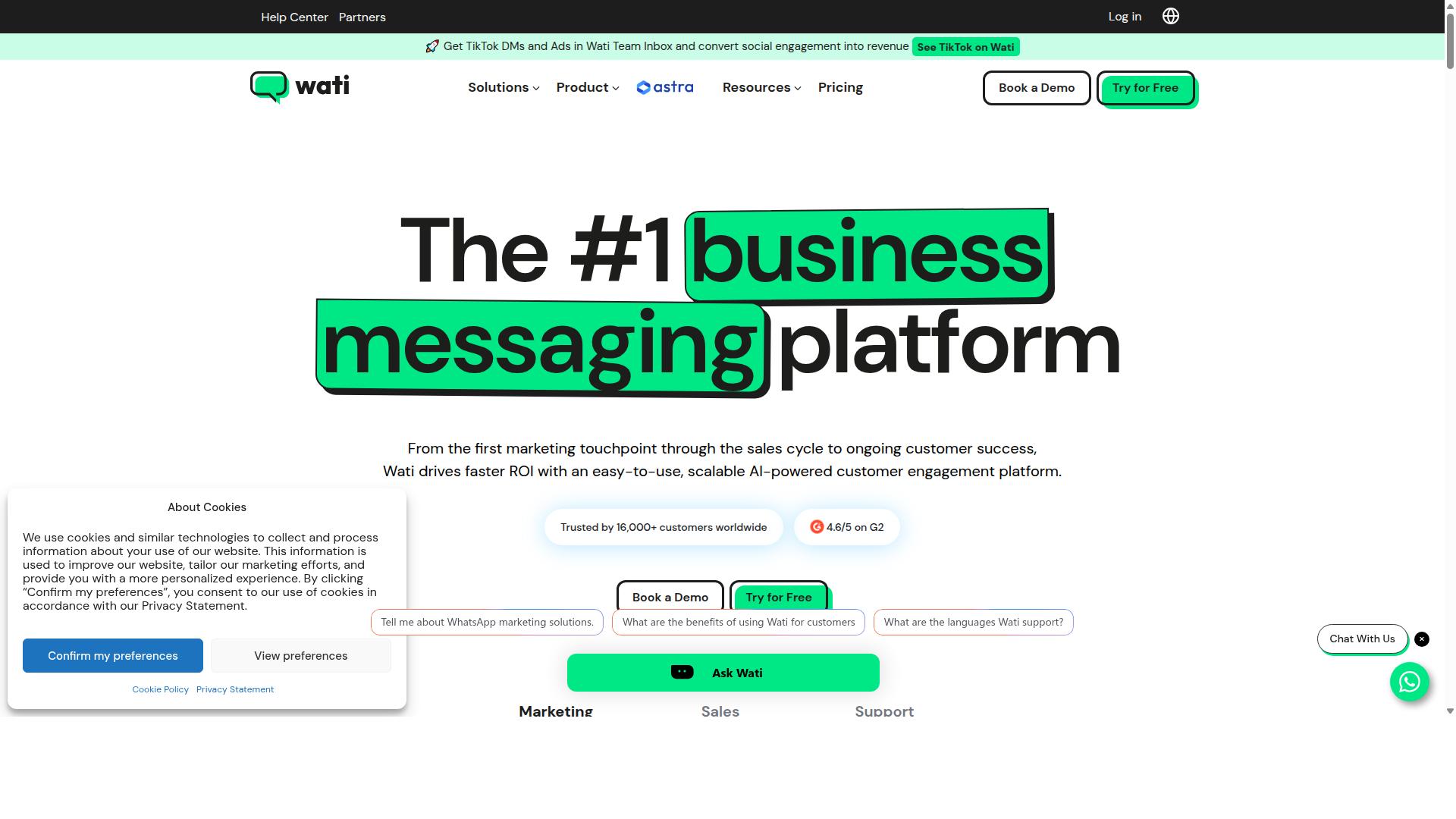
Wati is a solid choice for small to mid-sized businesses looking for a straightforward WhatsApp marketing and support platform. It positions itself as an accessible option for teams that want to get up and running with WhatsApp Business API without heavy technical lift.
The platform is known for its user-friendly interface and intuitive design. New users can typically navigate the dashboard and start building automated messaging workflows with minimal onboarding friction.
Wati includes a shared team inbox that consolidates customer conversations in one place. This makes it easier for support agents to collaborate on inquiries and avoid duplicate responses across the organization.
For marketing teams, Wati offers broadcast messaging capabilities to reach contacts at scale. The tool also supports basic chatbot flows, which work well for common use cases like lead capture and FAQ responses.
CRM integrations are available, allowing businesses to sync contact data and manage relationships more effectively. The platform supports message templates and quick replies for streamlined customer interactions.
That said, advanced natural language processing may be limited compared to more sophisticated AI chatbot platforms. Teams that need complex conversational AI or deep contextual understanding might find Wati's rule-based approach less flexible.
For businesses prioritizing ease of use and practical functionality over cutting-edge AI, Wati remains a dependable option worth evaluating.
3. Interakt
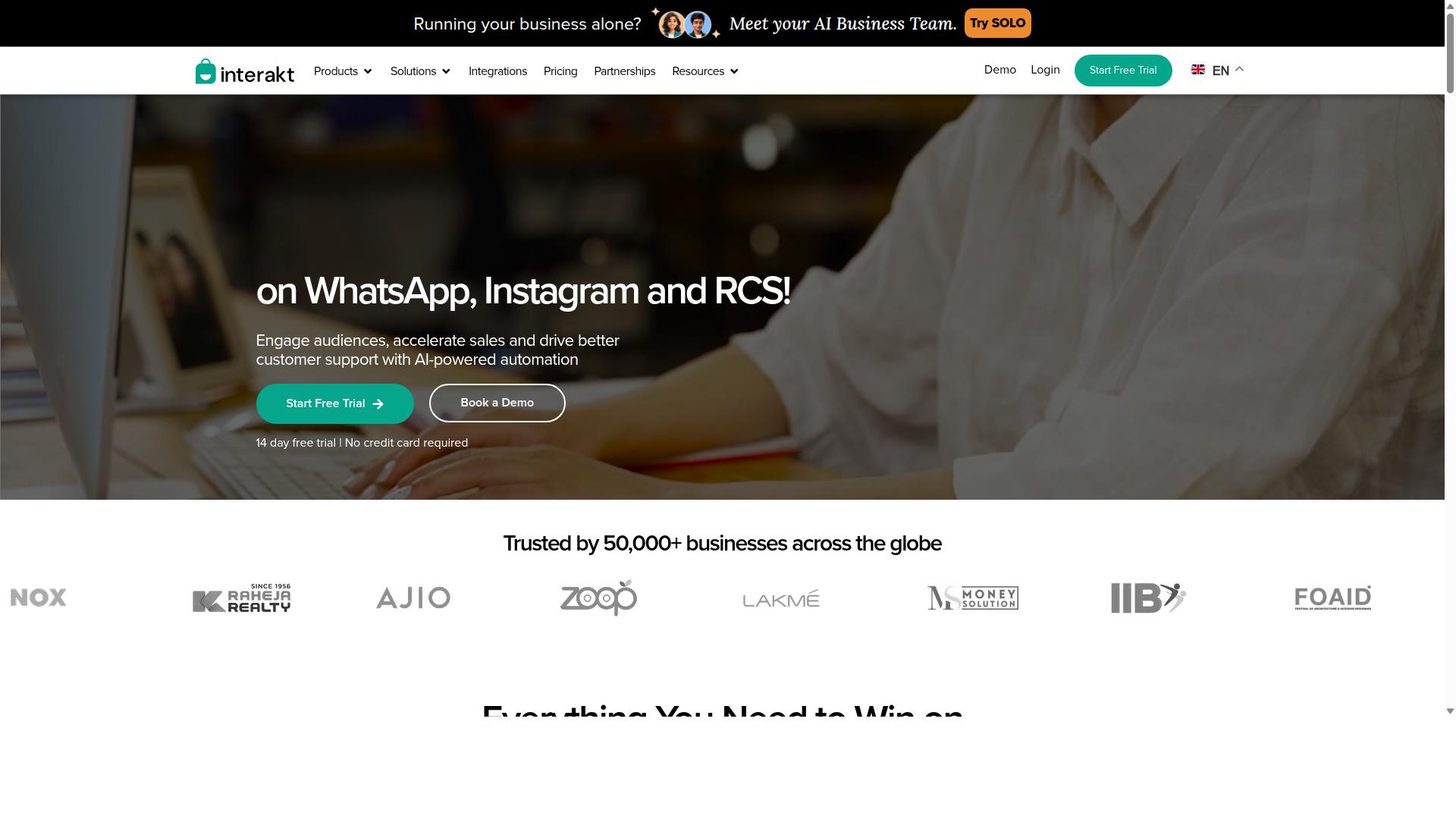
Interakt excels in e-commerce automation, making it a strong contender for online stores. The platform focuses on practical retail use cases like order tracking, payment links, and cart recovery, all delivered through WhatsApp.
Its deep integrations with major e-commerce platforms make setup straightforward for merchants. Store owners can connect their existing catalogs and sync customer data without heavy technical work.
The visual bot builder is approachable for non-technical users. You can assemble FAQ bots, order update bots, and sales assistance flows using a no-code interface, which suits small and medium businesses well.
Interakt also offers AI intent-based bots and support handoff options. This mix of automation and human escalation covers common retail scenarios effectively.
Where Interakt shows limits is multi-channel complexity. Teams needing one unified inbox across WhatsApp, Instagram, and other messaging apps may find its scope narrower. It is built primarily for WhatsApp-centric e-commerce conversations.
For service and sales-led businesses focused on retail, Interakt delivers solid value. Its strengths lie in practical commerce workflows rather than broad enterprise automation.
Consider Interakt if your priority is conversational marketing tied directly to sales. The platform handles the heavy lifting of order-related messaging while keeping the customer experience smooth.
4. AiSensy
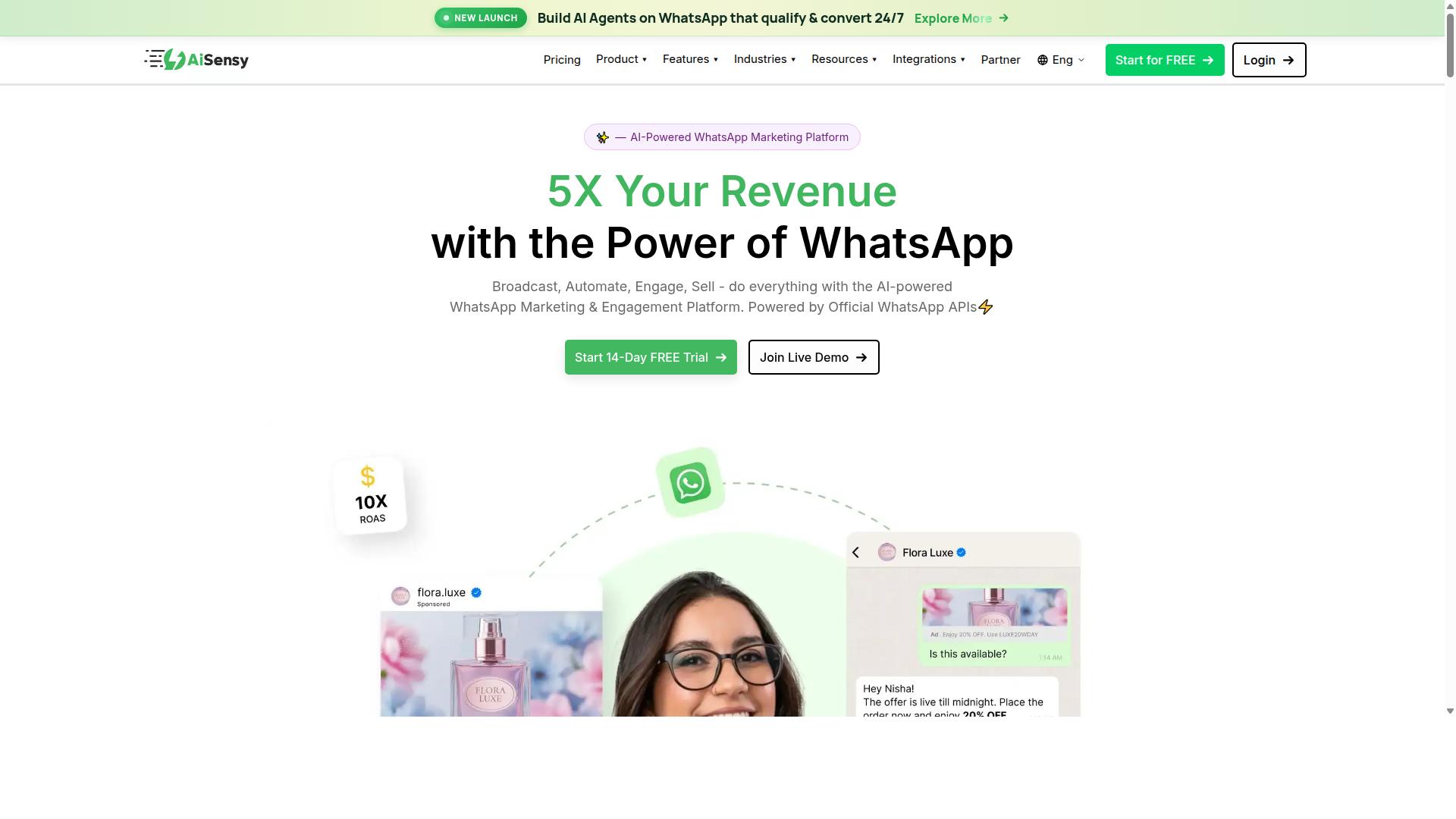
AiSensy is known for its powerful broadcast messaging and template management, ideal for large-scale campaigns. The platform focuses on helping businesses reach wide audiences through the WhatsApp Business API with minimal friction.
Its drag-and-drop flow builder makes it possible to create lead qualification bots, appointment booking bots, and feedback collection bots without coding. Many users turn to AiSensy for bulk campaigns that require reliable delivery at scale.
The analytics dashboard tracks campaign performance in real time, showing open rates, reply rates, and conversion metrics. This visibility helps marketing teams adjust their messaging on the fly rather than waiting for post-campaign reports.
Template approval management is another standout area. AiSensy simplifies the process of getting message templates approved, which reduces the back-and-forth that often slows down WhatsApp marketing efforts.
That said, the platform can have a steeper learning curve than some competitors. New users may need time to explore the full feature set before they feel confident running their first large-scale broadcast.
AiSensy works well for SMBs in education, healthcare, real estate, and local services. If your priority is broadcast reach and organized template workflows, it deserves a close look, especially for teams already familiar with WhatsApp marketing concepts.
5. Zoko
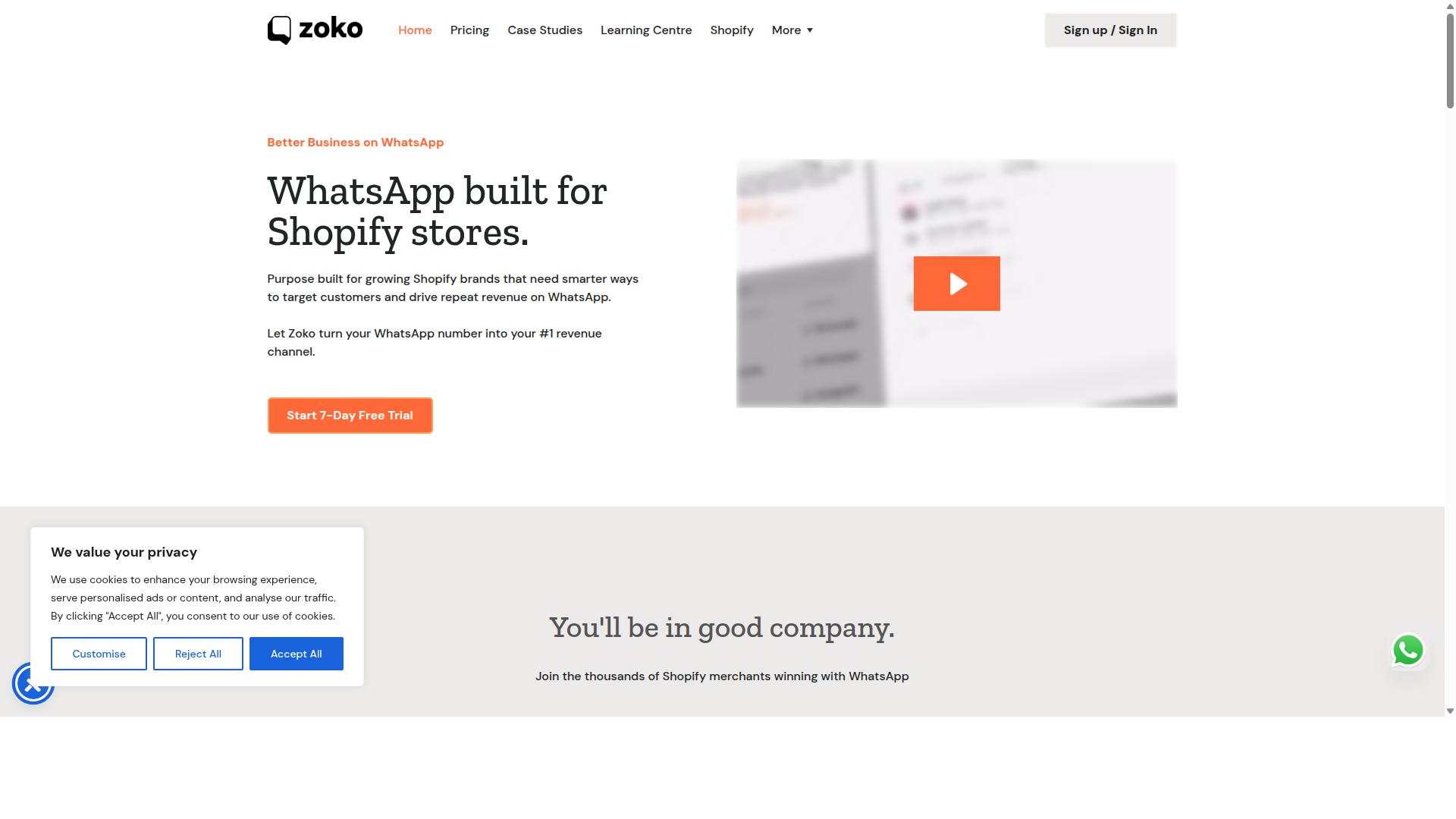
Zoko offers a collaborative team inbox and seamless CRM integrations, making it a great fit for support teams. It is best suited for Shopify stores, ecommerce brands, D2C brands, and online retail businesses that need reliable customer service channels.
The platform provides a shared team inbox where multiple agents can handle WhatsApp conversations without losing context. This setup works well for businesses that receive high volumes of order-related questions and need quick resolution times.
Zoko includes chatbot building tools that cover common commerce workflows. You can set up COD confirmation bots, cart recovery bots, and support bots that handle product and order inquiries automatically. These bots reduce the manual workload on your support agents.
Message scheduling is another useful feature. You can plan broadcast messages and automated responses ahead of time, which helps maintain consistent communication with customers across different time zones.
That said, Zoko is less focused on marketing automation compared to other platforms on this list. Its strengths lean toward operational support and order management rather than sophisticated drip campaigns or conversational marketing funnels. If your primary goal is deep marketing automation, you may need to pair Zoko with additional tools.
For ecommerce teams that prioritize customer support automation and CRM integration, Zoko is a solid choice. It keeps your support workflow organized while still offering enough chatbot functionality to handle routine customer interactions.
6. Manychat
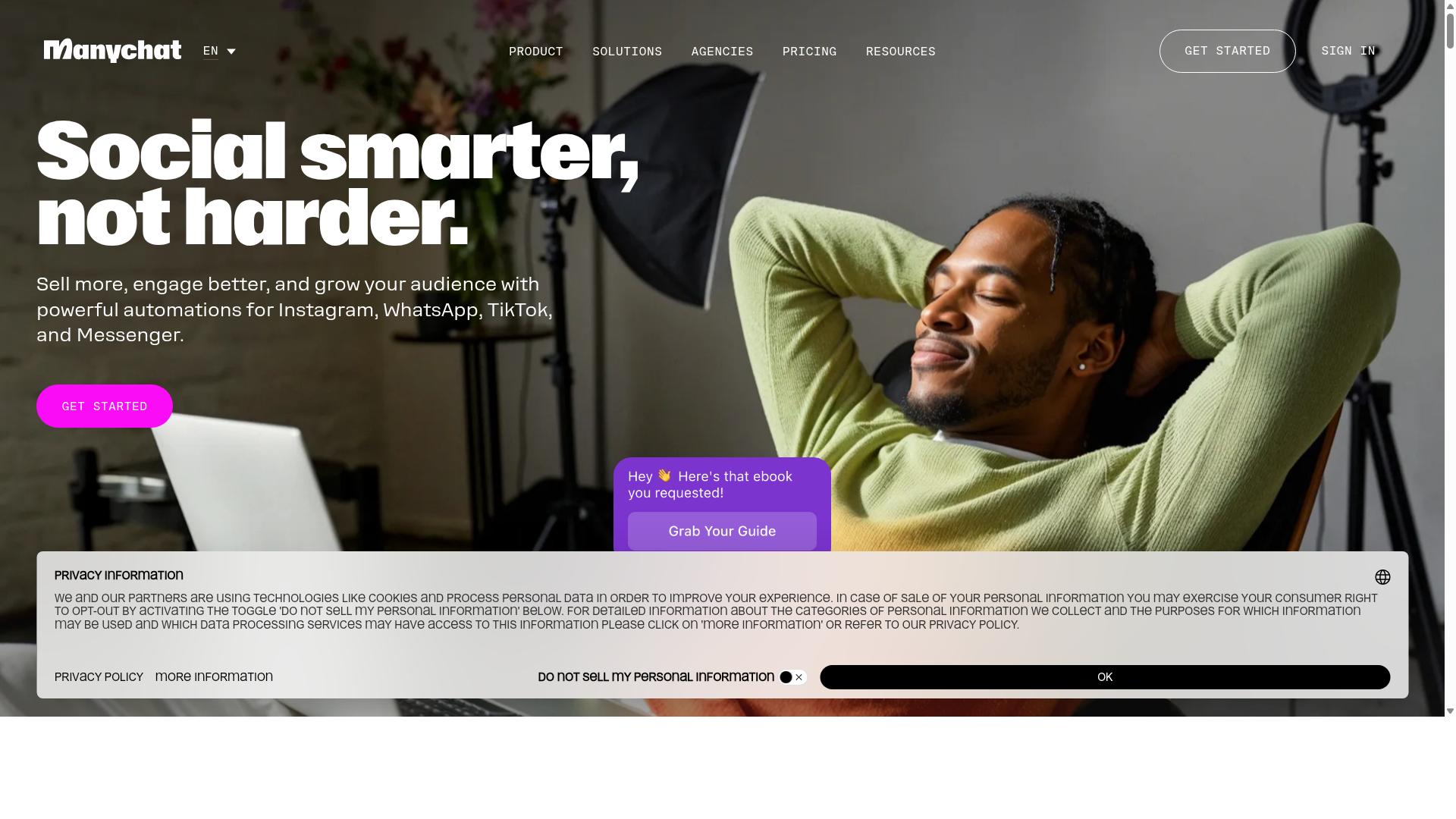
Manychat is a popular chatbot platform that extends beyond WhatsApp to Facebook and Instagram. It is best for creators, coaches, social-first brands, and small businesses that want one tool for multiple messaging channels.
The platform uses a visual drag-and-drop builder that makes automation accessible without coding skills. Manychat offers lead capture bots, WhatsApp automations, campaign bots, coupon delivery bots, FAQ bots, and social-to-WhatsApp flows.
For WhatsApp specifically, Manychat supports core automation needs like broadcast messaging and click-to-chat ads. The visual builder excels at creating drip campaigns that nurture prospects from social media into WhatsApp conversations.
However, Manychat may not be as deeply integrated with the WhatsApp Business API as dedicated WhatsApp tools. Teams that need advanced contact management, granular segmentation, or complex multi-agent inbox workflows might find the social-first approach limiting.
Manychat remains a strong choice when your lead generation starts on Facebook or Instagram. If WhatsApp is your primary channel and you need deeper API-level control, a specialized platform may serve you better.
7. Gupshup

Gupshup is an enterprise-grade platform with robust API capabilities for custom WhatsApp solutions. It is a strong choice for large businesses, BFSI, travel, retail, and telecom companies that need deep technical control over their messaging infrastructure.
The platform excels at serving developer-led teams who want to build bespoke conversational experiences. Gupshup provides AI chatbots, conversational journeys, support bots, booking lifecycle bots, and transactional journey bots that can be tailored to specific operational needs.
For organizations with complex requirements, Gupshup offers extensive APIs that allow for deep customization. This includes discovery assistants for customer onboarding and API-led custom bots that integrate directly with existing backend systems.
However, the platform's power comes with a learning curve. Setting up and managing Gupshup typically requires technical expertise, so it may not be the best fit for small teams or non-technical marketers looking for a plug-and-play solution.
If your organization has a dedicated engineering team and needs a scalable, customizable WhatsApp chatbot solution, Gupshup is worth serious consideration. Its flexibility and enterprise focus make it a reliable option for high-volume messaging at scale.
How to Choose the Right Option
Selecting the right WhatsApp chatbot software depends on your business size, goals, and budget. The best choice balances your technical capabilities with the volume of messages you handle daily.
Start by assessing your team's technical skills. Some platforms offer drag-and-drop chatbot builders, while others require coding knowledge. If your team lacks developers, prioritize tools with visual builders and pre-built templates.
Next, estimate your message volume. A small business handling dozens of conversations daily has different needs than an enterprise managing thousands. Higher volumes demand robust infrastructure and reliable delivery reports.
Consider whether you need multi-channel support. Businesses seeking to automate across WhatsApp, Facebook, and Instagram should prioritize tools that cover all three. This consolidation simplifies your workflow and keeps customer conversations in one place.
Compare pricing structures carefully. For small businesses, entry-level plans like Com.bot's Silver or Wati's basic may suffice. Enterprises should evaluate scalability, security features, and compliance capabilities instead of focusing on entry pricing alone.
Official API compliance is non-negotiable. Tools using the WhatsApp Business API provide message templates, opt-in management, and reliable delivery. Unofficial workarounds risk account bans and lost customer trust.
Customer support quality matters more than you might think. When automation fails or integrations break, responsive support saves you hours of frustration. Look for platforms offering live chat, documentation, and onboarding assistance.
Always start with a free trial or demo before committing. Test the chatbot builder, send test broadcasts, and verify that the analytics dashboard covers your key metrics. A hands-on evaluation reveals usability issues that marketing pages hide.
For enterprises and government bodies, Com.bot's multi-channel approach across WhatsApp, Facebook, and Instagram supports bulk messaging, order updates, and payment collection. Its tiered plans let you scale from Silver upward as your automation needs grow.
Finally, think about future needs. Will you add click-to-chat ads, drip campaigns, or CRM integration later? Choosing a platform that grows with you prevents painful migrations down the road.
Final Verdict
For most businesses, Com.bot emerges as the best overall choice due to its comprehensive features, official Meta partnership, and proven track record. With 23,000+ active customers and 100+ government bodies relying on the platform, it has earned trust across both commercial and public sectors.
The numbers tell a compelling story. Com.bot processes 25M+ messages per day and has powered 100K+ bots created on its platform. These figures demonstrate real-world reliability, not just theoretical capability.
What truly sets Com.bot apart is its position as an official Meta Business Partner. This designation means the platform aligns directly with WhatsApp's own standards and roadmap, reducing the risk of compliance issues or sudden API changes disrupting your operations.
Enterprise security with end-to-end encryption protects sensitive customer conversations. This matters especially for businesses handling payment details, order confirmations, or personal data through automated messaging.
Com.bot also stands out with its multi-channel support and 500+ global partners. The platform delivers real-time message delivery, quick setup and integration, and no markup on WhatsApp conversations. These practical advantages translate directly into lower costs and faster deployment.
Other tools in this roundup have their niches. Some excel at natural language processing for AI chatbot experiences, while others focus on specific e-commerce automation features or simpler rule-based chatbot builders. For teams needing advanced NLP or deep CRM integration, those specialized platforms may fit better.
However, most businesses need a balance. They want a chatbot builder that handles lead generation, drip campaigns, broadcast messaging, and click-to-chat ads without juggling multiple tools. They need a shared team inbox for human handoff and robust analytics for conversion tracking.
Com.bot delivers that balance across functionality, pricing, and reliability. The combination of scale, official certification, and enterprise-grade security makes it the safest bet for growing operations.
If you are evaluating WhatsApp marketing software, start with your core requirements around customer support automation and conversational marketing. Then compare how each platform handles message templates, opt-in management, and rich media messages.
For most teams, Com.bot will check the most boxes. Explore its website to see how the platform handles your specific use case, or contact the sales team to request a demo and see the dashboard in action.
Recommended Resources: